Jelly Bean Prayer

Red is for the blood He gave.
Green is for the grass He made.
Yellow is for His sun so bright.
Orange is for the edge of night.
Black is for the sins we made.
White is for the grace He gave.
Purple is for His hour of sorrow.
Pink is for our new tomorrow.
The physicians were dispersed among the first pioneers of Westport. Some were college educated; others acquired their skills while working for an established practitioner. In 1881, twelve of the Kansas City physicians were women. Physicians served as specialist, surgeon, oculist, and dentist; treating every phase of bodily ailment. Most practiced medicine until their death. Westport physicians were well-known for their ability to patch up a man after a gun fight. The territory was continually harassed by predatory bandits before the civil war.
The first hospital wasn’t a great structure of lavish and remarkable architectural beauty. The first hospital was nothing more than an old Westport trading post. The two-story wood structure was converted by the Catholic nuns as an infirmary accommodating twenty patients.
The old Kansas City Hospital, founded in 1870, was located at Twenty-Second street and McCoy streets. In 1884, a new brick edifice was erected. The city council approved funds to build a two-story brick building in 1895. The building housed the surgical department and women’s ward. At the time, the city physician managed the city hospital. His subordinates were the in-house surgeons, and medical graduates and their assistants and stewards. The supervisory management rests with the board of health.
The board of health, in 1895, consisted of the heads of the municipal departments. The mayor was the ex officio president of the board, with the city physician as executive officer. The subordinate officers were a city chemist, a health officer, a milk and food inspector and a meat inspector. Those officers reported to the city physician.
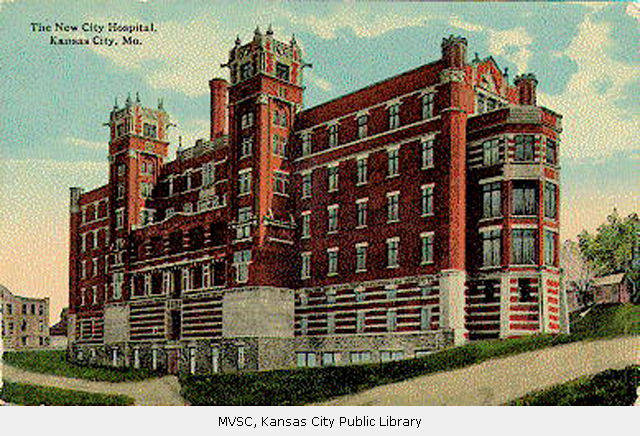
By 1908, the new City hospital was a six-story brick fortress-like building. Built of gray brick laid in white mortar, the fireproof structure is pictured on 23rd street, facing north. McCoy street is on the east.
St. Joseph’s hospital was founded in 1875, by the Sisters of St. Joseph of Carondelet. The building was completed in 1886 and was situated at 710 Penn street. It was modern for its time, having a an x-ray machine, and equipment of those in other metropolitan hospital. Much of the equipment was a gift by Dr. Griffith. The St. Joseph hospital was able to hold 100 patients. by the 1900’s. Abundant provisions were made to charity cases and accommodation of any patient or persons of all religions, all were admitted without question.
Signing up for healthcare was disappointing. I still can’t go to the doctor, and my headaches and nausea are getting worse. I enrolled in the healthcare.gov, after several attempts, finally got recognized by the system. I qualify for free coverage with a $6500 deductible. I think that means I have to pay $6500 out-of-pocket expenses first, before the insurance company will kick in their share. I will not be going to the doctor, because I have empty pockets.
While I am not willing to spend money on my healthcare, I just took my pet duck to the vet. The duck needed surgery, she ate a lot of pennies. I couldn’t bare to see the poor bird suffer. I am looking forward to having Squeaky the Duck home for dinner, but not as the entree.
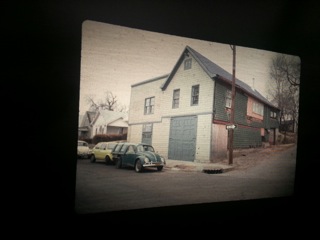
A fan, and previous resident of the property, provided the following picture of the house in the 1970’s. He set up the old home movie projector and then took this on his cell phone. myhousethetradingpost.wordpress.com
In 2011, FBI agent, William Ousely, involved in the prosecution of organized crime figures of Kansas City, published a book, “Mobsters in Our Midst, The Kansas City Crime Family.” He wrote several books about the mob era, 1900-1980s. In his testimony as an expert witness on mob activities, he claimed his sixth sense alerted him that danger was imminent or something big was going to happen. The existence of a Mafia-like organization has been disputed since the 1950s.
Do you know how funny, (lack of better word) to see your husbands name in a book related to organized crime? Bob Simons, my husband, a Kansas City attorney, has had the misfortune of associating with some of the city’s notorious criminals during his 40 years practice of law. He tells me of the days when favors and money flowed freely; but his secretary was murdered, and his law partner was shot in the head. As he recalls those days, the hair on the back of my neck and all along my arm start to feel like a cool air has passed over.
The historical reality is that the old Kansas City underworld has been a part of the fabric of Kansas City life. Prohibition helped fuel the growth of the vice and corruption between the crime family and the political alliance. The corruption was at the level of the judges of both the federal and Jackson County courts. Mobsters in Kansas City played rough, leaving behind hundreds of bloody stories of gangland activities since the 1900s.
The mobs criminal activities have been referred to as the national alliance of crime families, La Cosa Nostra, the Outfit, or the Clique. By 1931, twenty-six U.S. cities were suspected to have similar crime families that were restricted to men of Italian descent who had political, economic, and good social standing in the community. No crime family has ever referred to itself as the Mafia.
The Italians settled in the Northland of Kansas City. One of the founding fathers was Sicilian-born. In the early 1900s, the Italians of the Northland adhered to the culture and protocols of the Old World Sicilian Mafia. In 1940, Nick Civella was a member of the Kansas City outfit. Many have remained in the shadows, never being identified.
Joe Bonano was identified as the Who’s-Who of Hoods of New York in 1957. Along with, Joe Filardo and Nick Civella, who were identified as being part of the Kansas City Missouri mob family. Kansas City’s organized crime society has tried to avoid scrutiny. Their formula relied on ignorance, forgetfulness, and apathy on the part of the public and their political influence. The sponsors of the mob were members of the business community.
The Bonano family of Kansas City is responsible for the beautiful stone and masonry work in my backyard. Read the Garden of Eden for more about the backyard. Visit my blog again, myhousethetradingpost.wordpress.com for more stories of Kansas City’s unknown past.
From the time the log-cabins fell into disuse and the first frame business and house dwellings began to appear, Kansas City has had fire protection. Few cities have been so fortunate as Kansas City in escaping disastrous fires. In the beginning, neighbor helped neighbor. Later fire companies were formed which were also social organizations. The few men who formed the fire company were associated with both socially and in fighting fires. The head of the fire company’s social order was the foreman.
The first fire company in Kansas City was organized in 1837. After the war, the revival of commercial enterprises and erection of new buildings, came the need for better fire protection. Not long after the water works department had been established the city installed fire hydrants. Today, the Kansas City Fire Department is operated by the city under the command of fire Chief, Paul Berardi. There are 34 fire stations under Kansas City’s seven battalions.
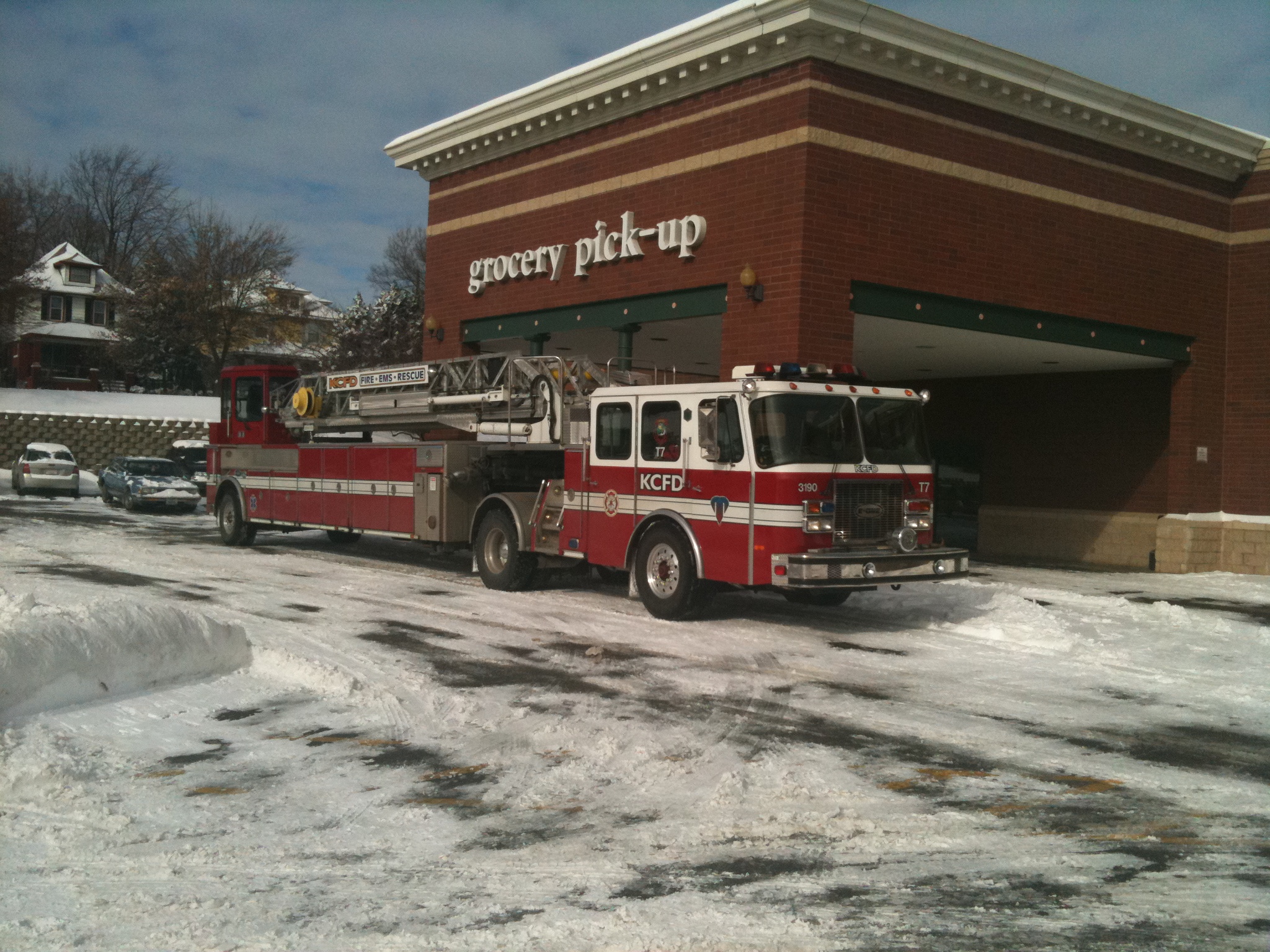
My husband and I have a game we play, taking pictures of the fire truck and the firemen at the local Westport grocery store. We see the fire truck at the grocery store a lot. We try to get a picture of the guys buying junk food and stuff in between emergency and non-emergency calls. We understand that when there is a non-emergency, the fire trucks often have time to stop at the grocery store after going on a call. But their impulsive buying habits make my husband and I laugh.
In Kansas City there is a natural road, the old Indian trail, provides the easiest route for me to drive about the city. There are two nice highways, constructed, in the Twentieth Century. Interstate-35, North and South, zips through the city. Interstate-70 takes drivers East and West. However, the Indian trail, now paved, consist of a variety of inner city streets that are often S-shaped or at an angle to the block streets that dip and rise throughout the city.
During the cow town years, the clay roads became impassable when wet. In 2014, the streets in the “bottoms” still flood. The city around Westport floods. The cement city cannot absorb the rainwater fast enough on most rainy days. Many drivers have lost their cars and lives in Kansas City due to high water. I have been caught in such a scary situation before.
Your heart is racing, the streetlights providing the only light to guide you. Unless the transformers have blown up, lighting strikes out the streetlights. The darkness hides the dips in the road that are under water; if you drive into a street under water there is a chance your car will float away into a deep ditch and sink. I’ve seen it happen before my very eyes. With the children still young, screaming at the top of their lungs in the back seat, out of fear for their life.
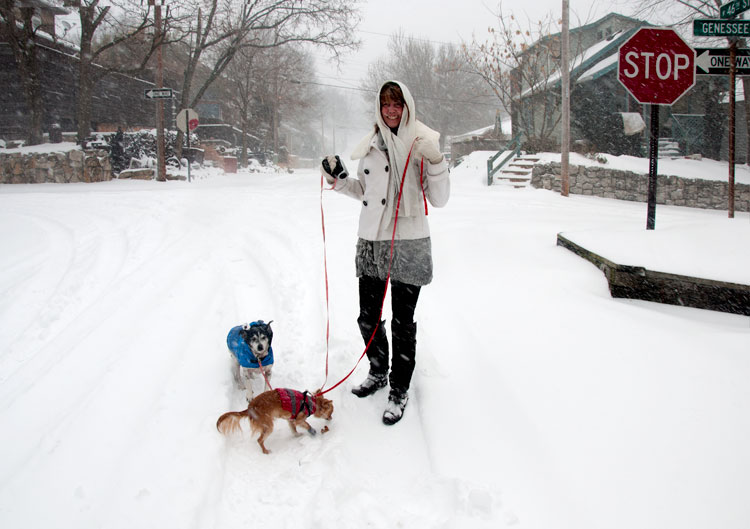
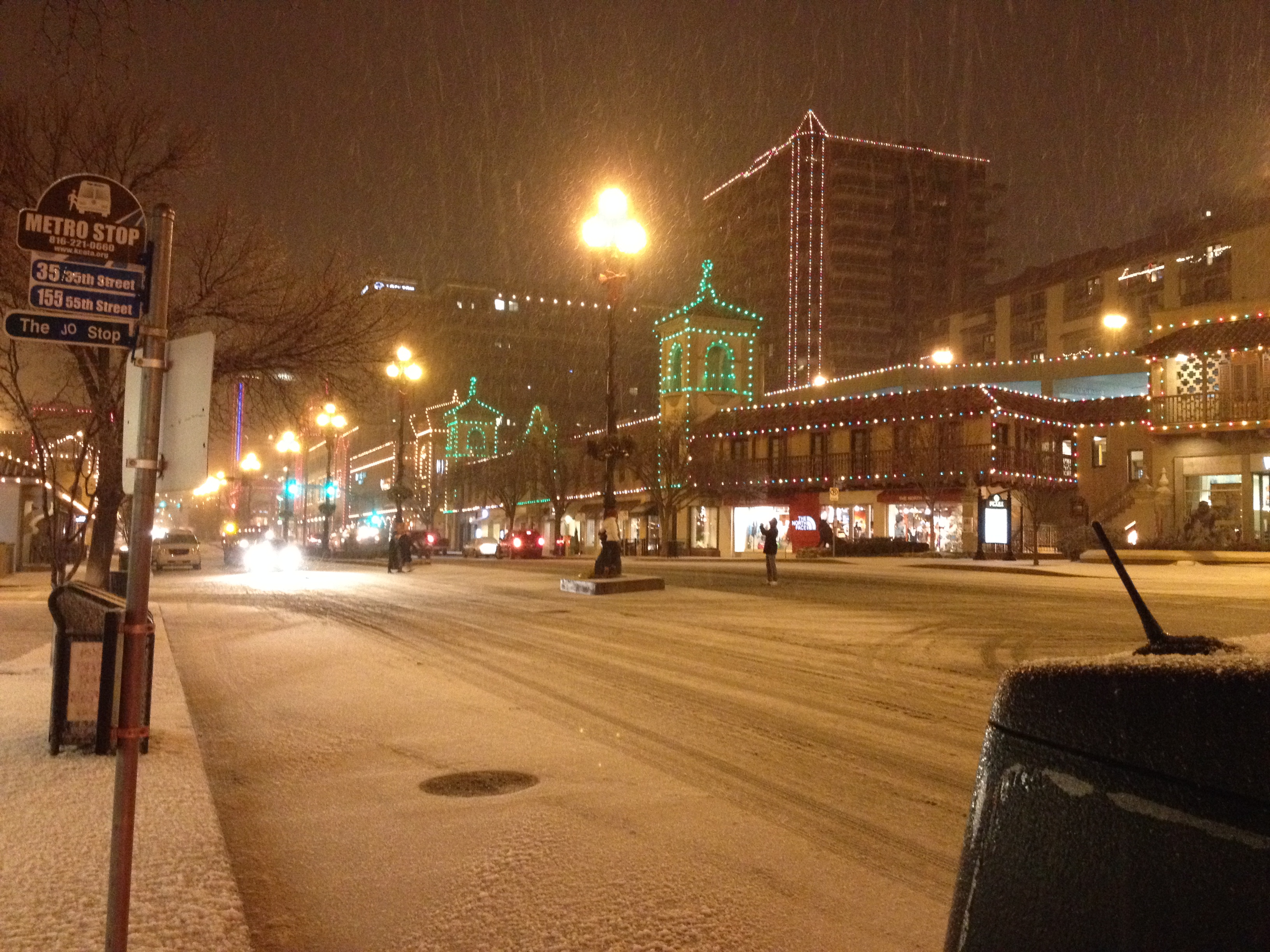
This morning the snow laid on the ground, all the neighborhood covered in white. I love the snow. I also love to drive in the snow, or at least I don’t mind it. My husband and son were not as thrilled that I drive at all. I drive a Mustang. I am an old’ fashioned girl; every woman in 1850 owned her own pony. I own a modern pony.
My son was late for work; he needs to get up an hour early to be able to ride the bus to work. He rightfully lost his drivers license (years ago), and walks to most of his destinations. The metro bus driver zoomed past his stop, earlier in the morning at 1:00 am.
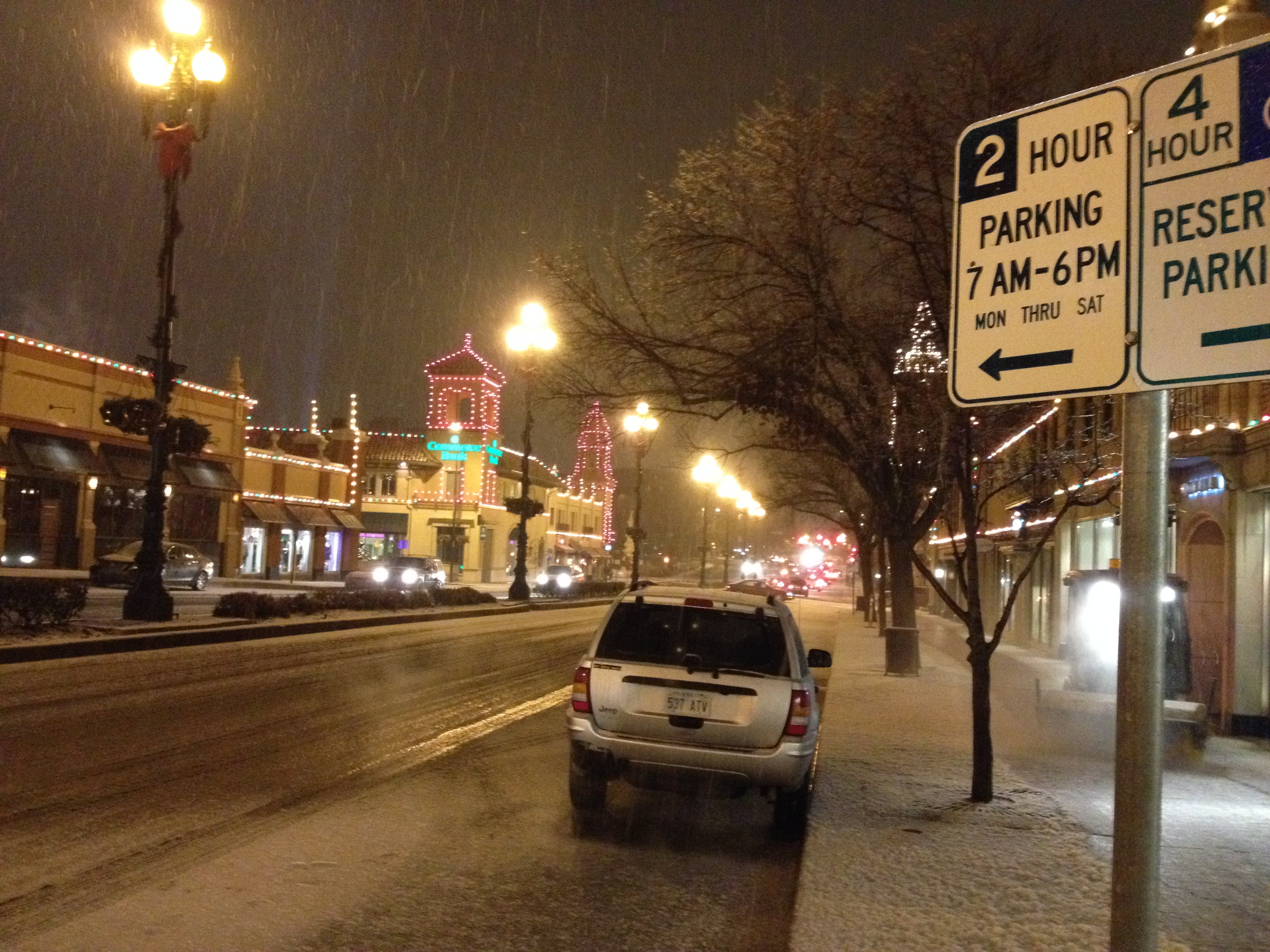
E-mo had just gotten off work. Pappa John’s is right in front of the Metro Bus stop, so E-mo knows the bus had not stopped yet. He stood in the dark of the night, the snow falling, and the streets becoming harder to maneuver. The metro bus came roaring down the street. E-mo was the only person standing on the sidewalk, among the white snow, his black and red Pappa Johns hat obvious below the streetlight. The bus drove past him, never stopping.
Behind the bus traveled three cars. The first car passed by. E-mo put out his thumb to hitch a ride. The second car had three men swerving in the snow, laughed and flipped E-MO off. The third car was a Jimmy John’s delivery car. All appeared to pass E-mo by in the snow, so early in the morning. E-mo looked up, and saw that the first car that drove behind the bus had stopped. The car was backing up, he was coming back to pick him up. E-mo had a ride.
The driver was an out of town man, driving a rental. He was Asian and had a bit of an accent. E-mo thanked the man for picking him up. Promised to give the man a free pizza if he’d like to visit Pappa John’s and buy a pizza. The man appreciated the offer, however, he was just in town for a business meeting and wouldn’t be staying long. The stranger seemed to know the streets, like he’d been to Kansas City before. I prayed for the stranger after he dropped Emo off at the house.
The stranger was now in the oldest part of town. The streets dip and rise to an elevation that is impossible to drive up. In the distance I can hear the tires of a car stuck in the snow. The city plow trucks will not be done with the streets for many hours.
The morning comes too soon, when it snows; E-mo overslept, and needed a ride to work. His only option was for me to drive him in the snow with my Mustang. I was up, dressed, and warming up my car. My husband shaking his head “no.” My son dragging his feet in the snow wishing I didn’t have to drive him. He was scared. Bad memories from the days of the flash floods. Snow is different.
I learned how to drive, growing up in Chicago, my birthday, is December 21. Do I have to give any more references to my snow driving qualifications? I can out drive any Missouri driven SUV or 4WD, on a snow day. Do not get in the car with me on a bright, clear, warm, sunny day; then my mind wanders and I drive like an idiot.
The first route I took the tires on the Mustang spun and spun; however I was proud to have gotten up the hill further than the Camaro that I passed. I turned the Mustang into a driveway, backed up into the street and headed down hill. The car picked up speed and I used the slippery snow to make the turn at the bottom of the hill. My son holding on to the dashboard and the side handle of the door. Taking a one-lane, Side Street that is rotted with potholes, now smooth in the snow. I ride the car through the stop sign so that it will pick up speed and make it up to Rainbow Boulevard. I’m in Kansas now. In Kansas, they have all their streets cleared of the snow. I have to get back over to Missouri, and up to 20th street.
I turned onto Westport Road, merging back into Missouri, the snow is several inches thick on the roads, and the plows are in front of us; three trucks in a row. The snowplows were barely skimming the pavement. It appears that the Kansas City snowplows are traveling too fast and the shovel isn’t engaged low enough to move any snow off the street. I’m driving and thinking their technique doesn’t look right. Then I turn onto McGee, and 20th, and drop Emo off in front of Pappa John’s Pizza.
The return trip was uneventful, except I followed three more snowplow trucks that were driving in a row without the shovels low enough to move snow off the street.
Sunday, in Kansas City, is like a ghost town. The buildings look empty. The streets are lacking of people. The lonely cars parked along the streets, the only indication people are near by.
On the Fourth of July, 1863, Kansas City celebrated the opening of the first railroad bridge over the Missouri River. In fact, it was the only bridge across the Missouri River. The owner of the Union Pacific Eastern Railway, made a successful ascension in his Balloon from the public square, now known as the present City Hall location. A crowd from Missouri and Kansas cheered amid the firing of a cannon. The Coates House or Broadway Hotel hosted a grand banquet in honor of the railroad.
The first passenger train, in 1864, ran between Kansas City and Lawrence, Kansas. The Topeka stop was added next. By 1909, a trip to Topeka from Kansas City, took two hours with many passenger trains on three different rails. The rails were extended 385 miles West, by the year 1868, and allowed excursions from Kansas City to Denver. The ride required two nights and one day for the trip. At this time, buffalo still roamed in herds, that often delayed the trains which had to wait for the buffalo to cross the tracks. A trip from Kansas City to Denver, cost $45.00. Today, Amtrak will get you there in eleven hours, for $166.
It was a round about journey from Kansas City to the East before the Missouri Pacific railroad. Travelers would leave Kansas City by Steam boat and arrive in Weston, Missouri. At Weston a connection was made with the Platte Valley railroad that went to St. Joseph, Missouri. The St. Joseph railroad would take passengers to Hannibal, Missouri. Passengers bound for Chicago, would board a Steam boat from Hannibal to Quincy, Illinois. Connecting with the Chicago, Burlington & Quincy railway of Illinois. The trip from Kansas City to Chicago was made in forty hours. There was only one train a day, and no choice of route.
The train was established in 1854; Kansas City broke ground for the first rail lines in 1860. Soon afterwards, parents of unwanted children started to use the train to dispose of children. “The Childrens Aid Society of New York Orphan Trains,” ran in the years 1854 to 1929. My grandmother, was one of those children. A note was pinned to a little girl’s jacket by her mother, when she was five years old, most likely announcing her availability to be adopted. The train traveled from junction to junction until at last it stopped for a long time. All the little boys were chosen first. She was an overlooked little girl, she traveled on the train until it ran out of tracks. She was placed on a returning train back to New York. When the train stopped at the train station, a couple decided to adopt her.
The older couple had no children of their own. They had come to the train station to adopt a little boy, but they had been running late. Her name, Dorthy, was the only child left to pick from. It isn’t clear if their intent was to make her their scullery maid, but she spent the next ten years cleaning their house. Soon after Dorthy was adopted, Mrs. Brandt had a child of her own, a son. A year later, the Brandt’s had a daughter. Dorthy’s chores increased with her new bother and sister.
The Brandt’s were a wealthy German family, at the turn of the Century. Mr. Brandt, is known for his architecture. There are several historic homes and apartment buildings that give credit to him in the Chicagoland area. However, the Will that he and his wife bequeathed, left out their adopted daughter, Dorthy. All their wealth, went to her brother and sister, natural-born heirs.
Dorthy, passed away years ago, during the Thanksgiving holidays, in a nursing home north of Kansas City. She had just moved into the nursing home due to a colon problem. She got the opportunity to meet her real mother in the 1960’s. It was a surprise to find out that her mother was a Pennsylvania Amish woman, who had gotten pregnant by an ‘English’ man. Apparently, the young Amish woman and the ‘English’ man, did not stay together. The Amish woman tried to care for her twin children for as long as she could. She had placed the children on the train, in about the year 1910, when they were just five years-old. As the old Amish woman spoke to Dorthy, she remembered she had a twin brother. Her twin later contacted her, after their mother who abandoned him, located him living on a farm in Illinois. He’d been adopted by an Iowa farm family, who were very kind to him. After he inherited the family farm, he bought a bigger farm in Illinois, where he retired and passed away in the same year Dorthy passed.
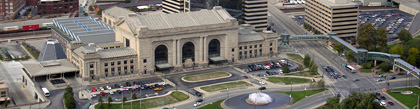
By 1870, the railroad industry had become a monopoly, as it was the life blood of American commerce. After, competing railroad companies layed duplicate tracks to do business in the popular cities, the railroad companies realized merging operations would increase profits. The railroads were allowed to exist as a “natural monopoly” because multiple companies would be a waste of financial and material resources. The train slowed the amount of business Westport once saw. Hunters no longer needed trading posts. Wagon trains were obsolete like the need for a place to quench your thirst after traveling the dusty trail. Union Station became the hub for business travel and pleasure adventures.
In Ernst Hemingway’s For Whom The Bell Tolls he writes about the angst of farewells at the train station. ” He had taken the train… to go away to school for the first time. He had been afraid to go and did not want any one to know it.” He also wrote, “the Kansas City train stopped…There was nothing in sight but the road and few dust-grayed trees. A wagon lurched along through the ruts, the driver slouching with the jolts of his spring seat and letting the reins hang slack on the horses’ back…”
Ernst Hemingway arrived in Kansas City by train. Hemingway came to Kansas City when he was 17 years old. It was in October of 1917. Ernst’s brother had gotten him a job at the Kansas City Star as a cub reporter. His brother Tyler Hemingway was living in Kansas City and had a friend who was the Star’s chief editorial writer. Although, Hemingway only stayed in town for six months, Kansas City likes to take credit for being mentioned in 5 of his novels, 4 published sketches, and dozens of short stories. He reported on the activities at Union Station. The train station had people coming and going. This is where he got introduced to ‘shady characters’ and celebrities.
His story, In Our Time, resembles the work he did for the Star. Another one of his passages describing Kansas City is found in, God Rest Ye Merry Gentlemen.
“In those days the distances were all different, the dirt blew off the hills that now have been cut down, and Kansas City was very like Constantinople. I was walking from the Woolfe Brother’s Saloon where, on Christmas and Thanksgiving Day, a free turkey dinner was served,”
The fact that he writes about the Woolfe Brother’s Saloon has never been related to my house, a Westport Saloon, but it should. The owner of my house in 1917, had a nephew staying here who was friends with Hemingway. The two of them got drunk frequently, it was his secret hide away from the adults and associates of the Kansas City Star. Westport has always been the part of town that would have attracted a young man who wanted to hang out with creative individuals, drink, and party.
It is interesting to consider which characters that may have passed through the doors of this Westport saloon, or inhabited an apartment upstairs. I truly believe that Doc Holiday, Bat Masterson, and Daniel Boone have been here.
I am also convinced that Ernst Hemingway had a friend who lived here (The boy shown in the B&W picture of the tavern in 1909). The boy in the picture continued to live in this neighborhood until the age of 98. I share many of his stories in this blog. I do not remember the fellow’s name and I am not aware of his exact death (sometime in late 1990’s). If the man says he was friends with Ernst Hemingway, I see no reason why he should lie. There were lots of authors that have lived in Kansas City, he only mentioned being friends with Ernst. It is that old man’s recollection of frontiersman like Doc Holliday, Boone, and Hemingway that I write about.
Kansas City is mentioned in many of Hemingway’s writings. He continued to visit Kansas City over his life. He even had several children born in the hospital in Kansas City. Most likely Truman Medical Center, he describes it in his writings as the hospital on the hill down from Union Station.
A Mexican man, who could not speak English, was a familiar figure in Westport, because he traveled back and forth over the Santa Fe Trail. On his stay in Westport, he fell in love with a woman named Mamie, who couldn’t speak Spanish. With the help of Mr. Polk, an interpreter, the Senor, offered Miss Mamie a gift of a beautiful lady’s riding horse with white satin bridle and a magnificent silver studded Mexican saddle. Along with the saddle, twenty-six loaded wagons with every yoke of the oxen decorated with a white satin rosette. This gift was offered if she would accompany him to Mexico. Mamie was only 16 years old. She turned him down. Mexico was a long way from Westport, Missouri, and her friends. She did not want to be in a strange country, unable to converse with her husband.
This daughter of a pioneer, cried so bitterly, and was so unhappy. Because she loved the foreigner. The Senor knew this, so he arranged for her childhood friend, Stevie, (future Senator of Missouri) to go to Mexico with them. Together, Stevie and the Senor helped Mamie learn Spanish. Stevie Polk was promised a position of wealth. During his time there he was able to defend a client in Spanish before a Mexican judge. Mamie, however, grew lonely and wanted a companion of her own race and language and wanted to leave the strange country.
The Senor and Mamie had three sons. The boys were sent back to Westport to be educated. This gave Mamie the opportunity to make many travels to Westport over her lifetime. Mamie returned to Westport, years later, and worked as a cook for McCoy’s Tavern. McCoy’s Bar and Grill is still located at the corner of Westport road and Pennsylvania.
The people of Westport haven’t changed, we’re very much alike, and what was true of one neighbor, neighborhood, or family was true of all. The people of Westport, in 1853, would travel three to five miles to visit another family. One entire family would make arrangements to stay for several days or a week. They contented themselves with visiting each other. In the Twenty-First Century, Westport families, still come together during the holidays, like 4th of July, my birthday, and Christmas. And giving pretty gifts is still a tradition.
Mamie was offered a wonderful gift from the man who loved her. Her acceptance took her on an adventure she didn’t really know she wanted to be a part of. I can relate.
I met my husband Bob, a long time ago, when I was 11. He was a grown man, in his late twenty’s, driving an expensive sports car, an Austin Martin with Missouri plates. He laughs when I tell the story. He barely remembered the insignificant little girl he almost ran over, until the day, I came to his law office, thirty-two years after our first encounter. “I’ve Always Loved You.”
I sat in his law office, flipping through his photography portfolio; he had on the side table. He typed my divorce information into his computer. He was a very good photographer. One photo, the very first picture I opened the page on, was of the little blue sports car. Which brought back the memories of when he nearly ran over me, back in 1974. An incident, where a well-dressed business man nearly took my life. He grabbed my arm and said, “Little girl, you shouldn’t run out into the street!”
The morning came slowly. Outside, all was wet from the early morning rainstorm. I always sleep better during the rain. Not wanting to get out of bed, I reached for my husband, and he kissed my hand. We snuggled closer and I fell back to sleep.
Bob had gotten up several times in the night, he’d been a little restless lately, and suffering from a sore back. A few days back, he went outside to clean up the garden and somehow managed to slip and fall on the old wet decking. He didn’t feel injured at the time, now he’s in pain. He is not interested in seeing a doctor, which is the only advice I can offer.
Bob continued to lie in the bed for the rest of the morning. With a muscle relaxer and pain pill. I can only hope that he gets better soon. I know it must have been a nasty fall. It left a yellow and gray bruise along the side of his back. I realized it was another episode of nothing really works out very smoothly.
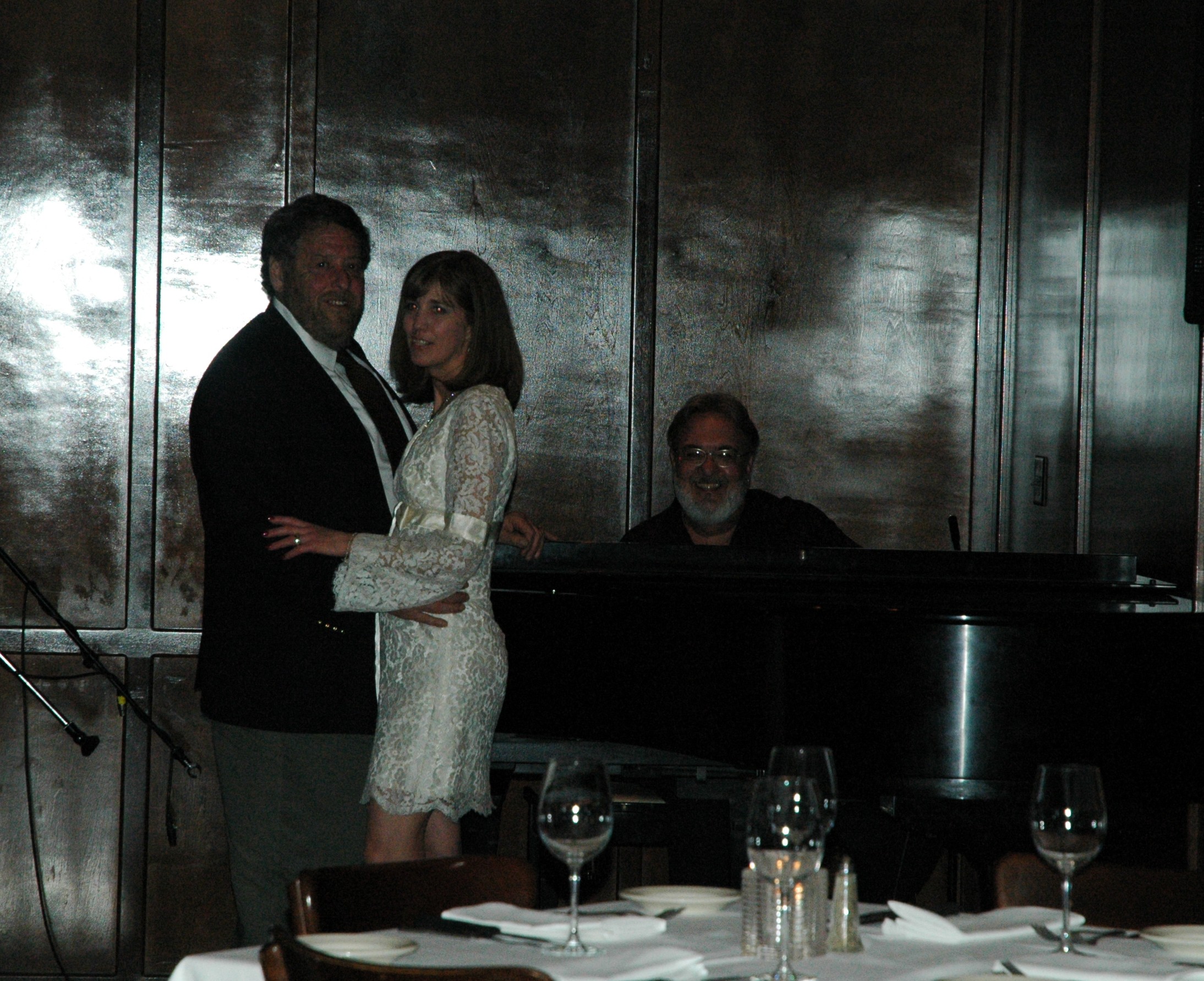
My house once served as a trading post on the Santa Fe Trail and popular spot for old gamblers. Like Doc Holiday, a true gambler that was known to play in this particular saloon. Some of the best poker games were won here. Bob took a gamble on love; we both did, when we got married. He had been a bachelor, with an impressive history himself. He had traveled, played music professionally, his artwork was displayed everywhere in the house, and his Ivy League law degree made him one of the most interesting men I had ever met.
I’ve Always Loved You
by Robert A. Simons
So much emotion.
Such a long, long time,
So many nights alone,
Till your eyes met mine.
And now when dark days come,
Your love keeps them away.
Now that your love,
Is here to stay.
So much emotion.
Such a long, long time.

So much confusion.
Lifetime for a dime.
I waited here for you,
Till my twilight time.
I wish we cold both be young,
And never let love slip away,
Now that your love
Is here to stay.
So much emotion,
Such a long, long time.

I've always loved you.

I've always loved you.
Always loved you,
And I do.
So much emotion.

Such a long, long time.
The room lite with candles “shone brightly upon the fair maidens with glossy water-falls, delaine or tissue dresses, hoop skirts and family jewels.” Young men and women, alternated standing in a circle. They moved left, holding a partner’s hand, in a game called, “Marching down to old Quebec.” In 1850, dancing in Kansas City, was forbidden by the churches. The young folks were allowed to have large parties, accompanied by some older persons, but the kids refused to call them “chaperons.” For fun, packs of older teens, would take a passage on one of the Missouri River Boats, and dance on deck to the fiddler music. A jolly captain, with a crew that supplied the teens with good southern cooking, made this excursion highly enjoyable.
Dancing became fashionable among the married sect of society women and their husbands, (the business men of Independence, Westport, and Kansas City). The two favorite events were the Pallas Ball and the Charity Ball. These events were given by the young ladies, who were teachers at the local schools and day nursery.
My house the trading post, in Westport, was refered to as a dance hall. It catered to the other type of family. The families of sturdy, good people, whose life was that of the frontier. From which they endured many hardships moving westward. The rules and manners of the parties attended, were at the discretion of the host. A party at the old Westport saloon would involve dancing and a “kissing” game. This would be followed by a “supper” that included pumpkin pie, peach pie, and buttermilk. Afterwards, the fun would continue with a run through the backwoods with candles.
The most desired and eligible young men were from Westport. The prettiest and wealthiest girls were from Kansas City or Independence. The finest parties were hosted by the sons and daughters of the first trading posts and saloon owners. The Santa Fe trade made these families wealthy. They built fine mansions within Jackson County. Their parties were legendary and drew in all the prettiest girls.
McCoy’s notes document that the Johnson Homestead, was near the long canon river bluffs, and had been occupied by Judge Bales who turned it over to Doctor Smart. John Johnson, had six children and a wife. The Johnson’s family were Methodist. They held family events south of Westport on the Indian Mission. The purpose was to honor the Indians. It should be noted that the Johnson family was adopted by the Shawnee Mission Indian’s Chief, in 1850, because of their great kindness to the tribe. The Johnson family and Shawnee Indian’s relationship is well documented. My daughter Megan has married into a Johnson family and given us, Eddie Johnson.
Before bridge parties and book clubs were popular, quilting parties were the social occasion for the mothers and daughters. Some girls would travel ten miles to arrive as early a nine o’clock in the morning, to quilt. The ladies arrived by carriage (with an old black man as a driver), pulled by one of the girl’s own personal riding horses. In the company of the other quilters, pioneer women, brought up with cortly manners and elegances, kept their words polite. The women sat on rush bottom chairs around a quilting frame while stitching in different areas.
In the olden days they said that Independence was a town with good breeding, and that Westport was a town of “good fellowship,” and that Kansas City had both, good breeding and fellowship. The belles of Independence went to some of the best schools of the west. The Wyandotte Indian girls traveled to Independence to attend the fine colleges for young women. One historic book described the daughter of a Westport man, who complained her father made fun of her eloquent educated speech; that she often spoke one way, while at home, and another when away at school.
Westport was a natural trading post for the people everywhere, going everywhere, each one carrying with them a story. Men were charming and the women strived for refinement. Many of the girls that made the society pages were called eligible belles. The daughters of the founding families, of the three cities, were described as popular and beautiful. Stories of romances and first tragedies fill the pages of history books. Kansas City, being proud of their citizens, kept many scandals out of the records.
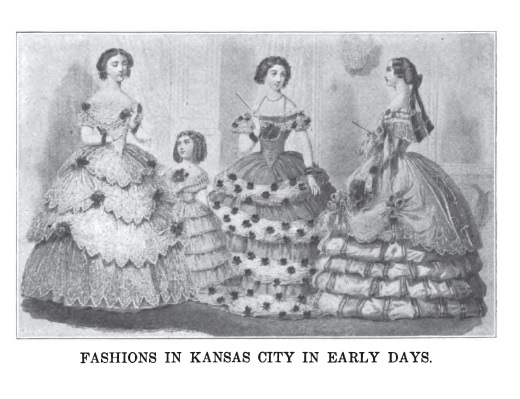
In the summer of 1850, the local trading posts and general stores received shipments of French and English, joconets, French challies, lace manellas, parasols, fans, kid and filet gloves, cotton and silk hosiery. Special signs called attention to Ladies’ Bonnets and the Millinery department for the latest Paris styles. Most orders from France arrived within thirty days. The fourth of July, brought out all the daughters to town for new purchases. Everyone was getting ready to attend the celebrations of band music or the various balls hosted by the local hotels and taverns.
Today, the most common women’s fashion in Westport or Kansas City, Missouri is the skinny jean and the knee-high boots, ankle boot, or cowboy boot. This is a good look on most ladies, especially if paired with an extra long top or mini-dress. Television shows like, any of the “housewives reality shows” provide a gist of which fashions are popular. However, in little Ol’Westport, we have specialty dress stores, where one of a kind outfits can be found. Everyone else shops at Walmart (or Target). What they end up with, is every other girl, wearing the same thing.
Even as far back as 1909, Mrs. Westlake, a high society lady of Kansas City, noted that the women’s wear was not very stylish. Mrs. Carrie Westlake Whitney was appointed the librarian in March, 1881. In her account of her first visit to Westport, she writes,”there was incessant hammering and banging from a dozen blacksmith’s sheds, where the heavy wagons were being repaired, and the horses and oxen shod. The streets were thronged with men, horses, and mules. While I was in town, a train of emigrant wagons from Illinois passed through to join the camp on the prairie. A multitude of healthy children’s faces were peeping out from under the covers of the wagons. Here and there a buxom damsel was seated on horseback, holding over her sunburnt face an umbrella or a parasol, once gaudy enough, but now miserably faded.”
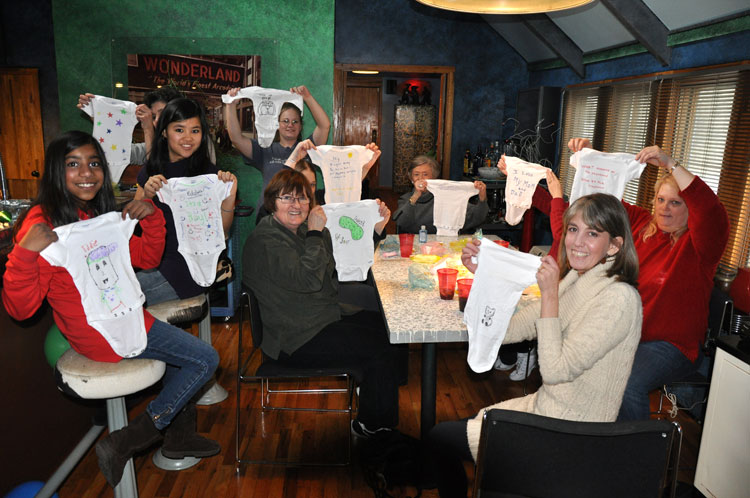
Kansas City women have been forming new clubs since the pioneer times. The women gathered to provide stimulus of association, the desire to engage in analytical thought and sustained discussions. They realized that as an organization they could broaden and deepen their intellectual work and accomplish more. In that same spirit I have established an organization, called the Professional Business Women’s Club of Kansas City, http://pbwckc.webs.com
The first ladies, who started organizations and clubs in the pioneer day sent letters out to the women they knew and messages delivered by their driver. I am sending out an invitation by blog; to any individual, female or male, that enjoys the History of Kansas City, the town of Westport, or believes children can become brave, creative, leaders from playing group sports, like soccer, to join my club, PBWCKC. http://pbwckc.webs.com/apps/members/
Wishing you many warm moments to share this Christmas. Thank you.
My house the trading post, today is a stage for Bob, and I. While I, make visitors feel welcome with a batch of home-made cookies, Bob, entertains them with his “licks” on the guitar.
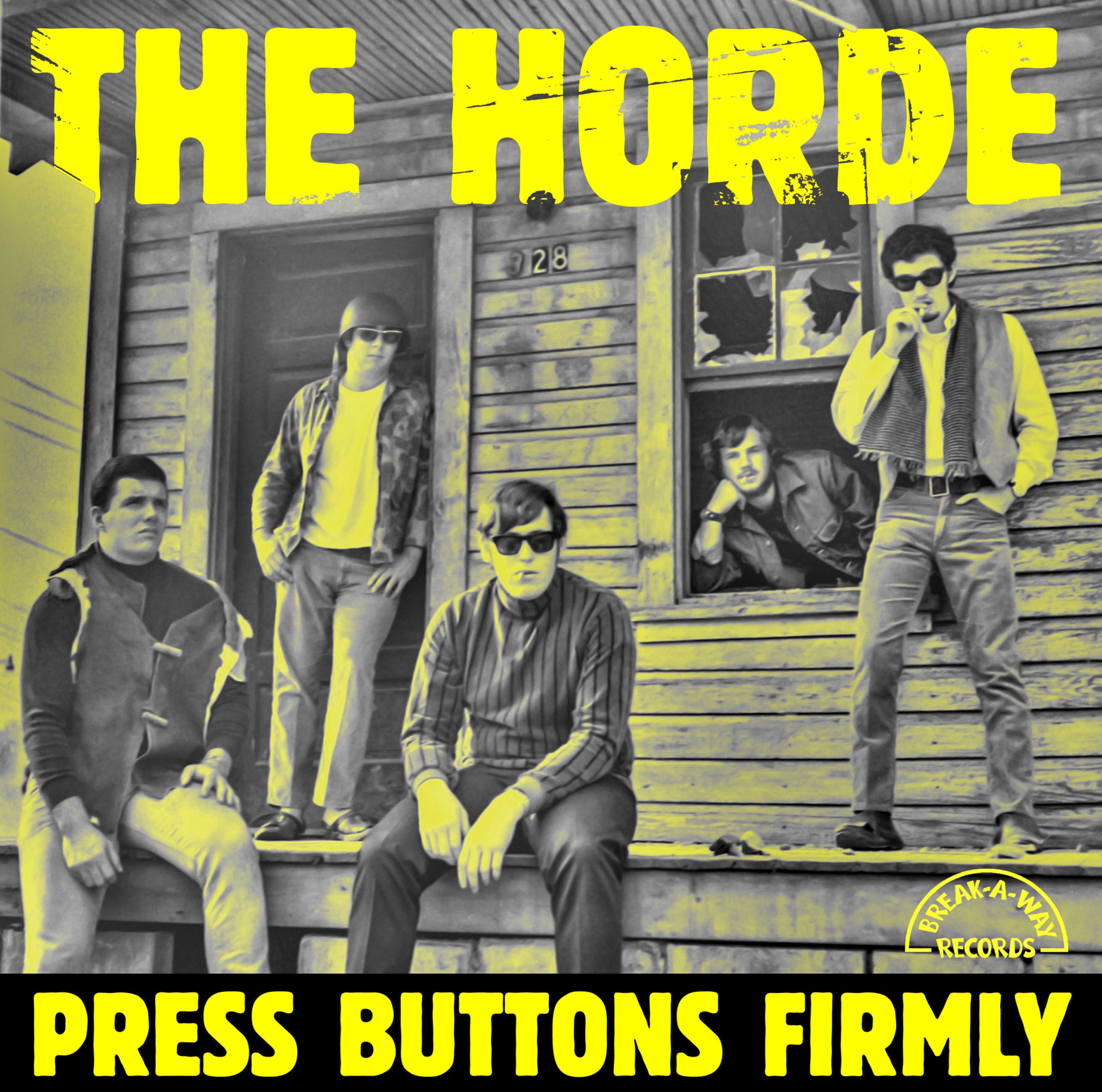
In 1967, Bob was part of a band called, The Horde. The Horde recorded a session in Durham, North Carolina while in college. That album was recently re-released this past summer. The band played gigs at numerous universities. They have been called the most exciting mid sixties garage band to ever be discovered. They starred at the usual teen dance clubs, Fraternity parties, and Student Union dances. The played songs like, “Paint It Black.” Which starts with Bob playing the guitar solo. The guys were considered hippies, traveling all over the place playing the ‘British invasion’ influenced music. They liked the raw in your face blues, filtered through British pop.
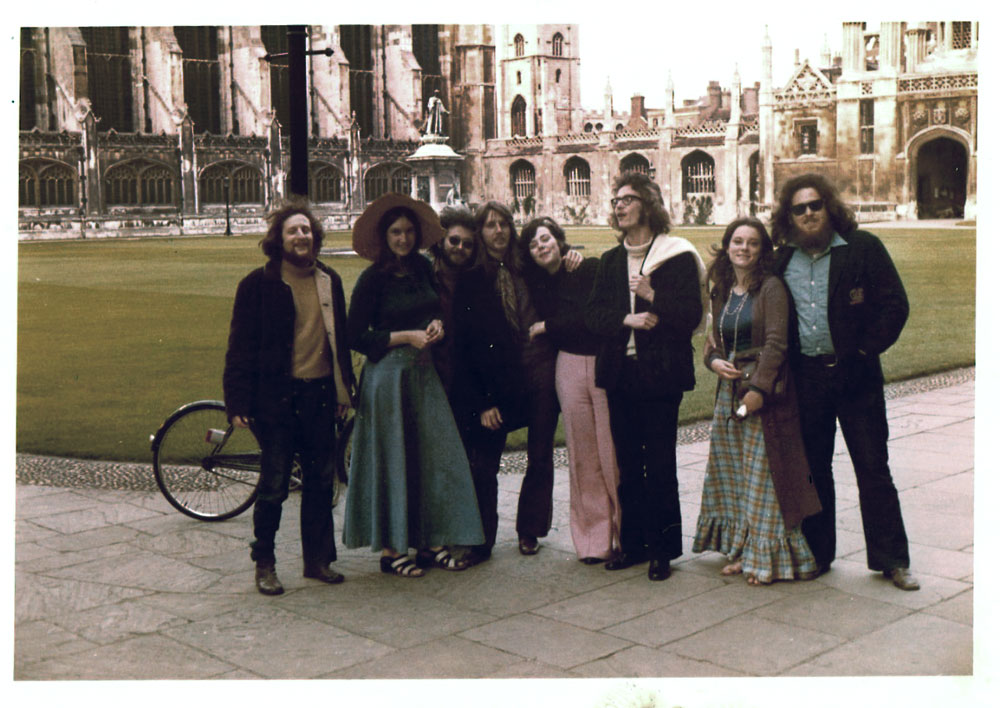
Cambridge, 1971
After the demise of the band the group went their separate ways. Bob graduated from college and went to New York to go to Columbia University Law School and later to Cambridge University, England. He now practices criminal law and family law.
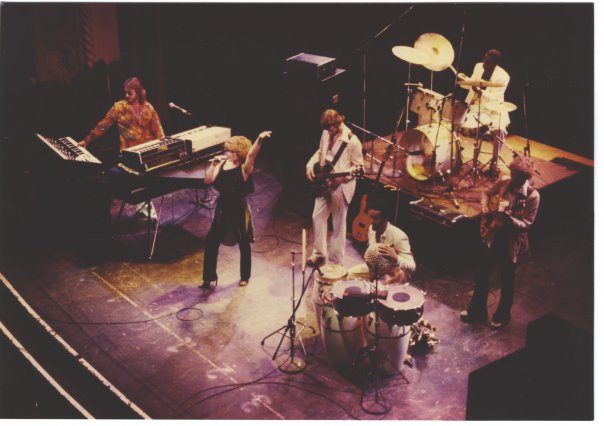
He continued to play rock and roll and other music venues through the years. He had a band once called the, “Bell Street Blasters.” With the Bell Street Blasters he played theater and stadium level gigs appearing in shows with B.B King, Johnny Winter, Stevie Ray Vaughn, Ray Charles, and others.
Press Buttons Firmly, by The Horde, Vinyl &CD.
Price: $23.99
During, the past summer, twenty-five brand new vinyl, The Horde, albums arrived, with two-dozen CD’s. They sit behind the display counter in Bob’s law office. The album’s public recognition is a little late, only forty-six years, too, late. Very, very few people out there are buying the Horde’s album, “Press Buttons Firmly.” A song titled after the guys noticed the message on the juke box in a tiny coffee shop on campus.
The Romantics. Bob, pictured on right.
North Carolina, in the sixties, was the deep south. The music the Horde’s were playing didn’t live up to the soul music country’s expectations. Bob and the band members, complained that the crowds constantly requested the song, “Stubborn Kinda Fella.” An incident the guys still talk about, is when a group of frat guys got fed up with the hippy band, and headed for the stage. Their drummer stared the angry mob down as the rest of the guys escaped. Take the time to listen to The Horde’s songs, amazingly good.
Max Groove and Bob Simons appearing at JAZZ on 39th and State Line Road.
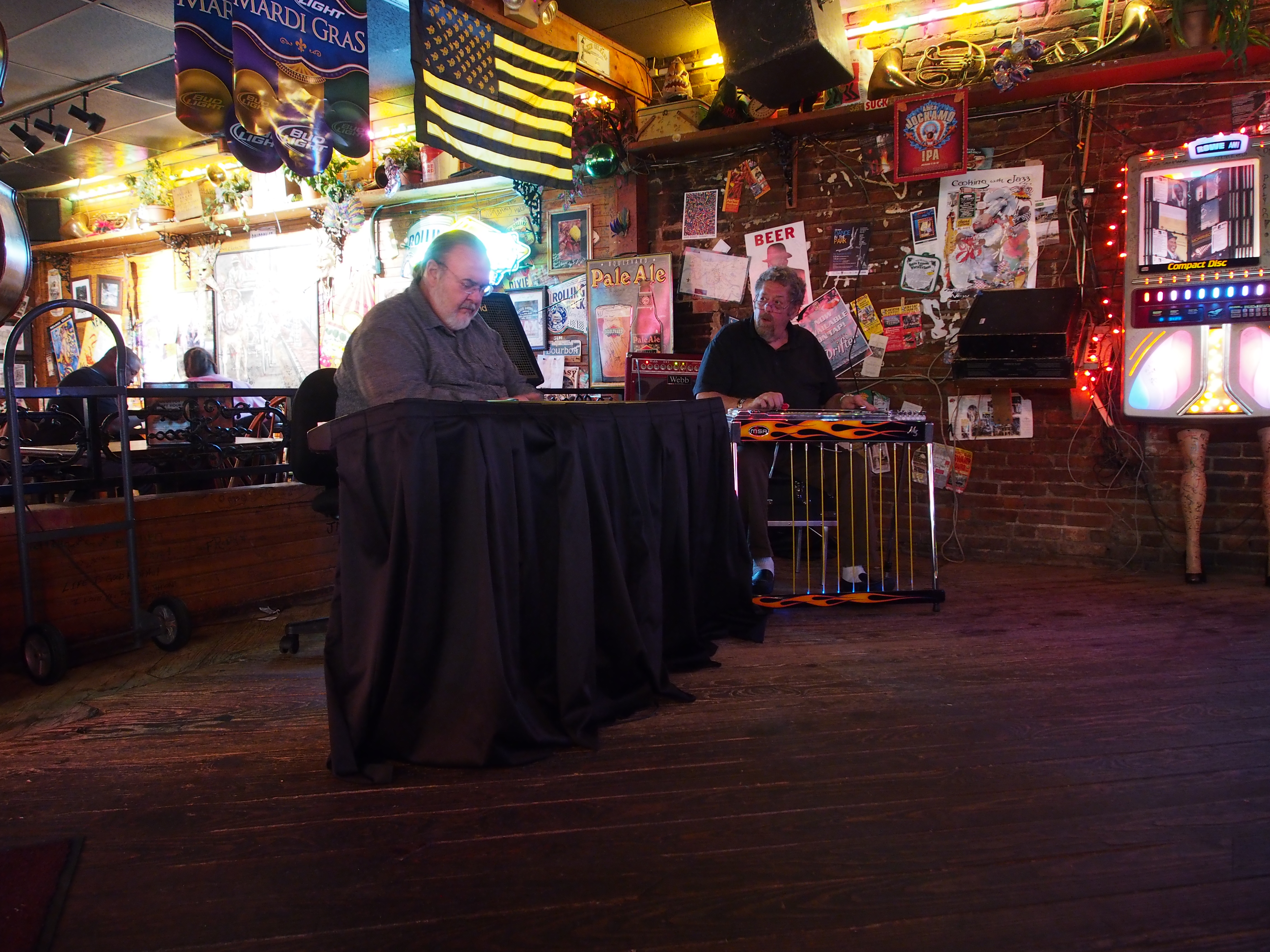
Today Bob plays jazz and country gigs on pedal steel guitar. He has been appearing in duos with Billboard charted jazz keyboardist Max Groove. Together they play Jazz R&B or original New Age Jazz. He is a talented musician who mostly jams with friends.
If you are looking for a unique gift for a music lover, or collector, please consider, The Horde, album, “Press Buttons Firmly.” I highly recommend the album, Break-A-Way-Records did a marvelous job remastering the album. Someone out there in the world actually owned the orignal version of the recorded songs and they put them on YouTube, that can be sampled at:
The original 1967 -record of The Horde last sold on ebay for $1800. There are only 25 copies of the original studio recording. The new album is also available on Amazon for just, $23.99.
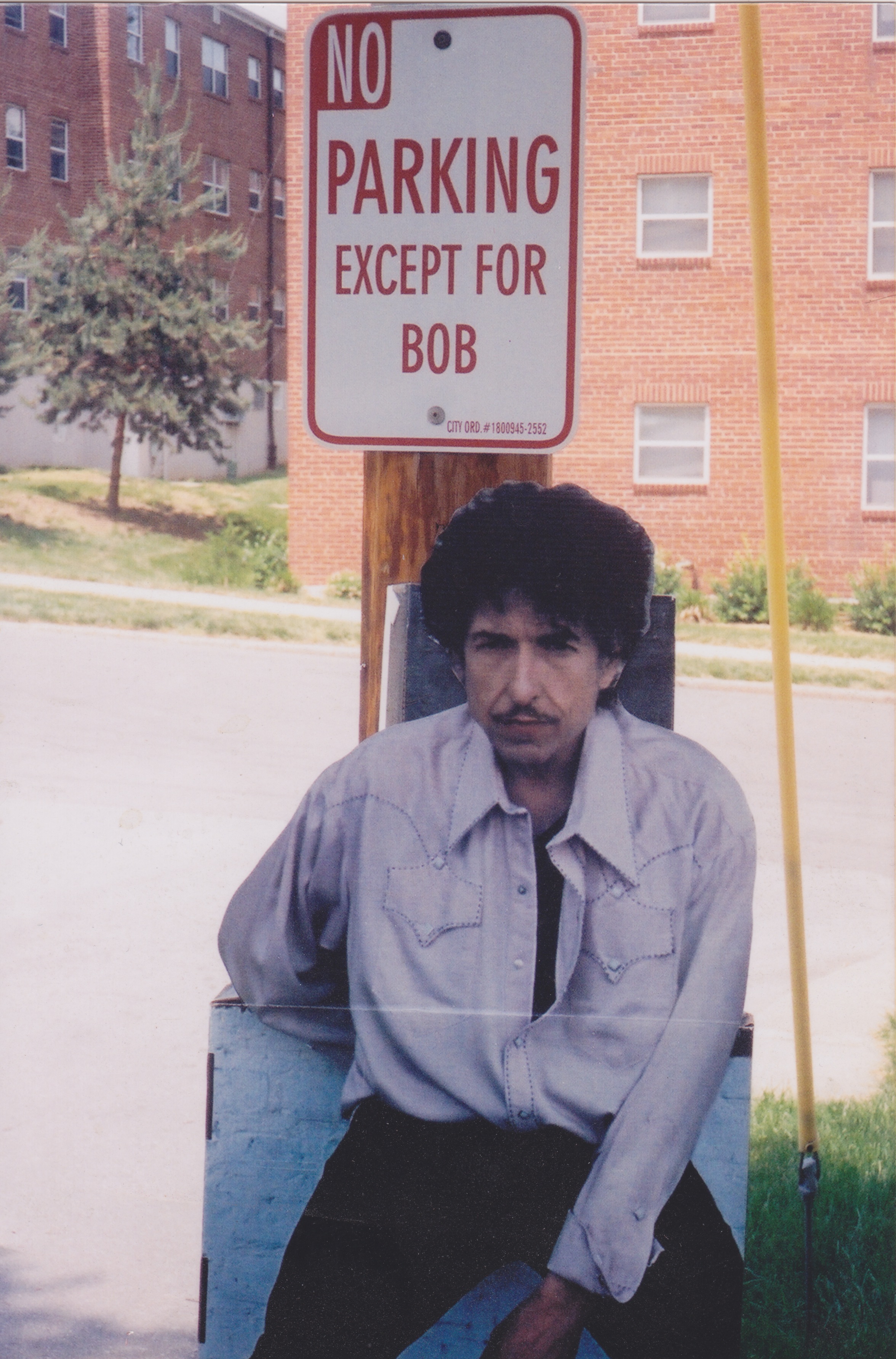
Bob Dylan
The routine at the house includes watching X-Factor. Tonight, like many other nights, I was enlightened by a brief music history lesson given by my husband Bob. Now mind you, I have heard of none these individuals or the songs. The song, ‘Hallelujah’ was song by a contestant on tonight’s X-Factor, a televised talent contest.
Leonard Cohen, a musician in the Music Hall of Fame who also received three Juno Awards nomination, got his start in the music business in 1967. Cohen is credited as the singer and composer of ‘Hallelujah.’ One of his earliest hits was with folk singer, Judy Collins, for the song, ‘Suzanne.’ Bob made me watch a YouTube video of this act (while I was trying to enjoy the X-Factor show).
In 1967, Cohen moved to the United States to pursue a career as a folk music singer and songwriter. During the 1960s, he was part of the Andy Warhol’s “Factory” crowd. According to Wikipedia, Andy Warhol speculated that Cohen had spent time listening to Nico in clubs and that this had influenced his musical style.” His song ‘Suzanne’ became a hit for Judy Collins and was for many years his most covered song. His song, ‘Hallelujah’ found greater popularity through a cover by John Cale.
The New York Times praised the song ‘Hallelujah’ in a review, noting that “Cohen spent years struggling to write the song ‘Hallelujah.” Many singers have covered versions of the song. There are over 300 versions known. It is often called one of the greatest songs of all time.
John Cale was a member of the Velvet Underground, an American rock band, active between 1964 and 1973. The band was part of the first real scene of the high literature culture of Andy Warhol. These people were the hippest of hipsters. The Velvet Underground was formed in New York City by Lou Reed and John Cale. I believe, Nico was also a singer and songwriter for the band.
Lou Reed was a frequent performer at ‘The Factory’, a studio owned by Warhol. Andy often asked his assistants to help set up parties, which were groundbreaking assemblies of musicians, artist, hipsters, gay partiers, and drug addicts. The rented studio apartment in New York’s grubby 60’s neighborhood pre-dates the Studio 54 era. Bob tells me this, but as I always lived in the Midwest, and really don’t have a clear conception of Studio 54 either.
Bob says that Andy Warhol supported the music of the Velvet Underground and this influence started the avant-garde craze. Avant-garde is a term used in the fashion world, and when describing something that is ‘cutting edge.’ Andy Warhol designed the cover of the first album for the band, a banana. That banana is one of Andy Warhol’s most recognized artworks. It became the most popular album cover art of all time.
Lou Reed went on to write a song in 1972, called “Walk on the Wild Side” on his second solo album Transformer. Lou Reed had performed at Max’s Kansas City in New York and Studio 54, two of the most famous and treadiest clubs in New York. Leonard was famous for his poetic song lyrics, ’Suzanne.’ Like singer songwriter, Bob Dylan, he was the poet of the time.
The song contest show X-Factor, has enlightened me to the history of old songs. From my husband Bob, I learn that he is often irritated that shows like X-Factor don’t actually acknowledge the cover songs properly. The old songs are, too often, credited to modern singers, like Mariah Carey, or to the last pop singer that sang the song. Passive television viewers, like myself, pay no attention to the originality of a song or who composed it. I usually don’t even have an opinion as to who sang it best.
While I watch television, I’m thinking, the judges are babies. The female judges on the X-factor wear a lot makeup. They represent youth and have a good game for knowing their own limitations and their wealth hides any immaturity. Simons Cowell has matured and he has been less critical of the young singers.
The whole time I am unable to actually hear the girls and boys sing on the show because in the background my darling husband, Bob has picked up the acoustic guitar and plays. Singing songs like ‘Wild Wood Flower.’ A song, I never heard before. He says it is the greatest country song ever.
I’ve heard it before, only ‘cause he sings it whenever he picks up the guitar. He knows other songs, and I like other songs, but that’s not what he plays. I like when he plays ‘Greensleeves, or Jonny Cash’s, ‘Ring of Fire.’ My Lutheran upbringing loves to sing hymns like, ‘What Child is This,’ during the Christmas season. I happen to know Mary J. Blige is not the original composer of that song.
Once, Bob and I, recorded, ‘Ring of Fire,’ for our grandson, Eddie. On one of those recordable page books. Eddie, loves to turn the pages of the recordable book and listen to gran-ma and pawpa sing various folk songs. If you’d like, I’d be happy to make you a book; just let me know. We have a few for sale.
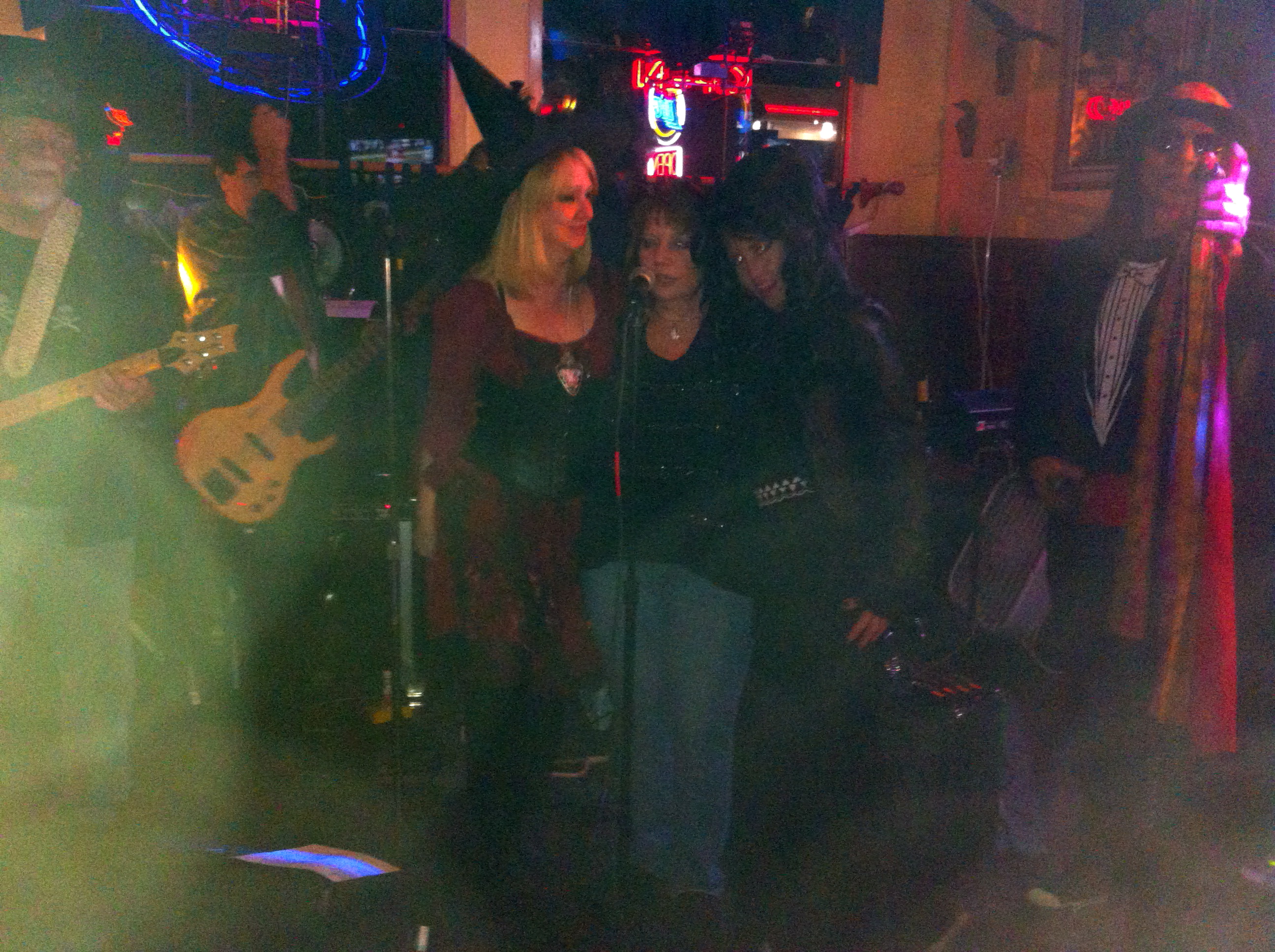
Typically, I don’t sing in public. However, I did sing in my high school choir. I have also, been known to take a shot of tequila and do a little goofing around singing. Last Halloween, at the Monster Bash hosted by a local Westport Tavern, I tried to perform an Amy Winehouse song.

















 MY HOUSE THE TRADING POST