Art, blog, History, Kansas City, Story, Uncategorized

My House the Trading Post Blog Time

thelion

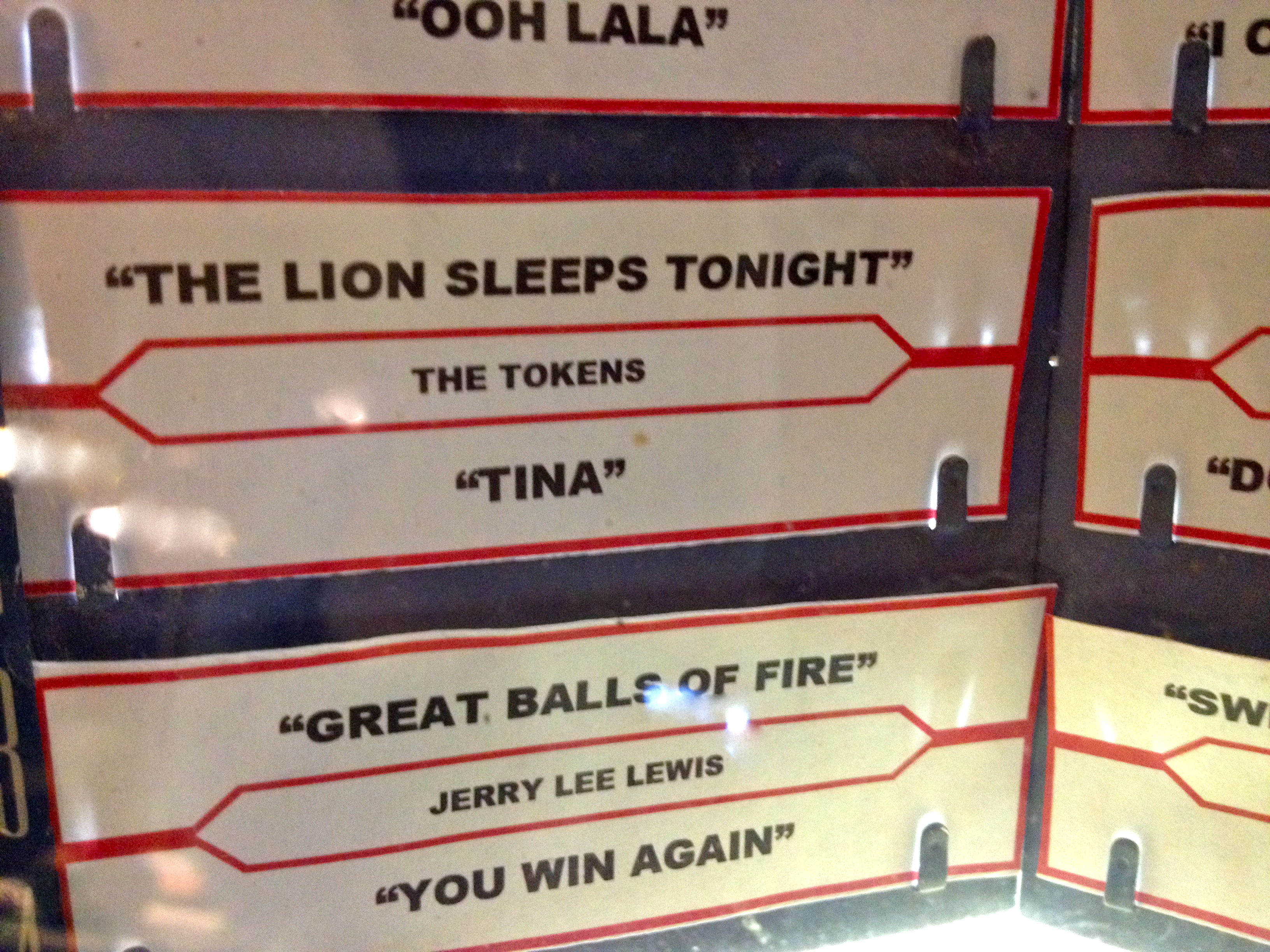
The change of season may bring the blues, but the treasures within this house can almost always brighten my mood. In my bed cloths I move from room to room in this huge saloon from long ago. I carry a load of laundry through Bob’s law office. I get the load in the washer. I drop a quarter into the juke box. A 1954 Wurlitzer plays my selection, “The Lion Sleeps Tonight.” With no one in sight, I dance and sing along.
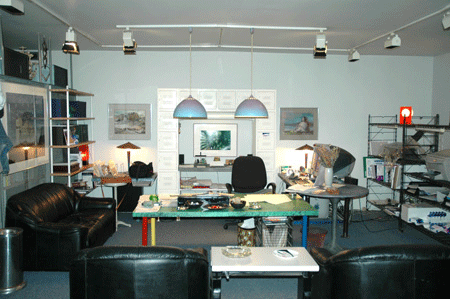
Not your traditional law office

Not your traditional law office

A 1954 Jukebox, left behind by, plays only 50's tunes.

A 1954 Jukebox, left behind by, plays only 50’s tunes.

It is interesting to consider which characters that may have passed through the doors of this Westport saloon, or inhabited an apartment upstairs.  I truly believe that Doc Holiday, Bat Masterson, and Daniel Boone have been here.

I am also convinced that Ernst Hemingway had a friend who lived here (The boy shown in the B&W picture of the tavern in 1909). The boy in the picture continued to live in this neighborhood until the age of 98. I share many of his stories in this blog.  I do not remember the fellow’s name and I am not aware of his exact death (sometime in late 1990’s). If the man says he was friends with Ernst Hemingway, I see no reason why he should lie. There were lots of authors that have lived in Kansas City, he only mentioned being friends with Ernst. It is that old man’s recollection of frontiersman like Masterson and Boone that I write about.

Not everything I post will be part of the book, “My House The Trading Post, Its History.” The audience for my book are my friends and children, specifically, my grandson. The earlier items I posted presented more historically accurate information directly from the history books. The historic nature of this property has not been officiated, but a line of communication has been established with the National Historic Registry Board.

I know for a fact that Bob Seiger, Robin Williams, Rick Spring=+#, BB King, and a song writer guy from ABBA, John Luke Pontic, Pee Wee Herman, One of the guys from ZZ Top, Bonnie Rate and Jackson Brown, to name a few that have been here to jam.  The last group of celebrities were brought here by my husband Bob, who is a musician when he isn’t practicing law. In fact, Bob claims that right after Jackson Brown jammed in the house, he wrote a hit song about a mean lawyer, shortly after his visit here. Bob says his time spent with Robin Williams the comedian, had him in hysterics; they visited the US Toy Store for Robin to get some props for his act (appearing at the Kansas City Comedy Club). There wasn’t an isle in the toy store that didn’t put Bob to tears. A private, rehearsed comedy routine, a memory trapped in Bob’s head.

My husband Bob, would like to be a full-time golfer, but practicing law pays the bills.  The celebrities Bob knows are still alive. I won’t be writing much about their time here, because such information could be incriminating since it was a different era when they partied here.
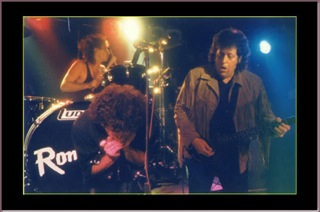
Bob Simons playing with Romantics, pictured on right

Bob Simons playing with Romantics, pictured on right

1900 Saloon

1900 Saloon

Consider making a donation,   http://pbwckc.webs.com/donate

Followers needed and random ‘likes’ appreciated, even if you can’t make a donation.

Standard
Art, blog, History, Kansas City, Story, Uncategorized

My House The Trading Post, The Train Era

My House the Trading Post, The Train Era

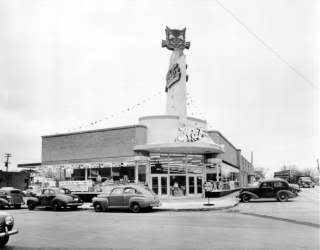
Westport Kratz Drug Store

The train was established in 1854, soon afterwards, parents of unwanted children started to use the train to dispose of children. “The Childrens Aid Society of New York Orphan Trains,” ran in the years 1854 to 1929. My grandmother, was one of those children.

A note was pinned to a little girl’s jacket by her mother, when she was five years old, most likely anouncing her availablility to be adopted. The train traveled from junction to junction until at last it stopped for a long time.  All the little boys were chosen first.  She was an overlooked little girl, she traveled on the train until it ran out of tracks. She was placed on a returning train back to New York. When the train stopped at the train station, a couple decided to adopt her.

The older couple had no children of their own. They had come to the train station to adopt a little boy, but they had been runnig late. Her name, Dorthy, was the only child left to pick from. It isn’t clear if their intent was to make her their scullery maid, but she spent the next ten years cleaning their house. Soon after Dorthy was adopted, Mrs. Brandt had a child of her own, a son.  A year later, the Brandt’s had a daughter. Dorthy’s chores increased with her new bother and sister.

The Brandt’s were a wealthy German family, at the turn of the Century. Mr. Brandt, is known for his architechture. There are several historic homes and apartment buildings that give credit to him in the Chicagoland area. However, the Will that he and his wife bequeathed, left out their adopted daughter, Dorthy. All their wealth, went to her brother and sister, natural born heirs.

Dorthy, passed away years ago, during the Thanksgiving holidays, in a nursing home north of Kansas City. She had just moved into the nursing home due to a colon problem. She got the opportunity to meet her real mother in the 1960’s. It was a surprise to find out that her mother was a Pennsylvania Amish woman, who had gotten pregnant by an ‘English’ man. Apparently, the young Amish woman and the ‘English’ man, did not stay together. The Amish woman tried to care for her twin children for as long as she could. She had placed the children on the train, in about the year 1910, when they were just five years-old. As the old Amish woman spoke to Dorthy, she remembered she had a twin brother. Her twin later contacted her, after their mother who abandoned him, located him living on a farm in Illinois. He’d been adopted by an Iowa farm family, who were very kind to him. After he inherited the family farm, he bought a bigger farm in Illinois, where he retired and passed away in the same year Dorthy passed.

By 1870, the railroad industry had become a monopoly as it was the life blood of American commerce. After, competing railroad companies layed duplicate tracks to do business in the popular cities, the railroad companies realized merging operations would increase profits. The railroads were allowed to exist as a “natural monoply” because multiple companies would be a waste of financial and material resources. The train slowed the amount of business Westport once saw. Hunters no longer needed trading posts. Wagon trains were obsolete like the need for a place to quinch your thirst after traveling the dusty trail. Union Station became the hub for business travel and pleasure adventures.

In Ernst Hemingway’s For Whom The Bell Tolls he writes about the angst of farewells at the train station. ” He had taken the train… to go away to school for the first time. He had been afraid to go and did not want any one to know it.”   He also wrote, “the Kansas City train stopped…There was nothing in sight but the road and few dust-grayed trees. A wagon lurched along through the ruts, the driver slouching with the jolts of his spring seat and letting the reins hang slack on the horses’s back…”

Ernst Hemingway arrived in Kansas City by train. Hemingway came to Kansas City when he was 17 years old. It was in October of 1917. Ernst’s brother had gotten him a job at the Kansas City Star as a cub reporter. His brother Tyler Hemingway was living in Kansas City and had a friend who was the Star’s chief editorial writer. Although, Hemingway only stayed in town for six months, Kansas City likes to take credit for being mentioned in 5 of his novels, 4 published sketches, and dozens of short stories. He reported on the activities at Union Station. The train station had people coming and going. This is where he got introduced to ‘shady characters’ and celebrities.

His story, In Our Time,  resembles the work he did for the Star. Another one of his passages describing Kansas City is found in, God Rest Ye Merry Gentlemen.

“In those days the distances were all different, the dirt blew off the hills that now have been cut down, and Kansas City was very like Constantinople. I was walking from the Woolfe Brother’s Saloon where, on Christmas and Thanksgiving Day, a free turkey dinner was served,”

The fact that he writes about the Woolfe Brother’s Saloon has never been related to my house, a Westport Saloon, but it should. The owner of my house in 1917, had a nephew staying here who was friends with Hemingway. The two of them got drunk frequently, it was his secret hide away from the adults and associates of the Kansas City Star. Westport has always been the part of town that would have attracted a young man who wanted to hang out with creative individuals, drink, and party.

Kansas City is mentioned in many of Hemingway’s writings. He continued to visit Kansas City over his life. He even had several children born in the hospital in Kansas City. Most likely Truman Medical Center, he describes it in his writings as the hospital on the hill down from Union Station.

Standard
Bob Simons, guitar player with Romantics, pictured on right

Bob Simons, guitar player with Romantics, pictured on right

My House the Trading Post, has introduced readers to my home town of Westport, Kansas City. The area boasts a rich history as the oldest established community in Kansas City. More than 150 years ago, Westport marked the passage into the Western Frontier and set the foundation for what it is today. The neighborhood’s historic past is fused with creative individuals, quaint houses, thriving shops, fashionable boutiques, local eateries, and hot night-spots.

Bob Simons, is the current owner of the saloon built-in 1853 that served early Westport and the Santa Fe trail. It has been rebuilt to accommodate the practice of law, music, and art-all at the same time.

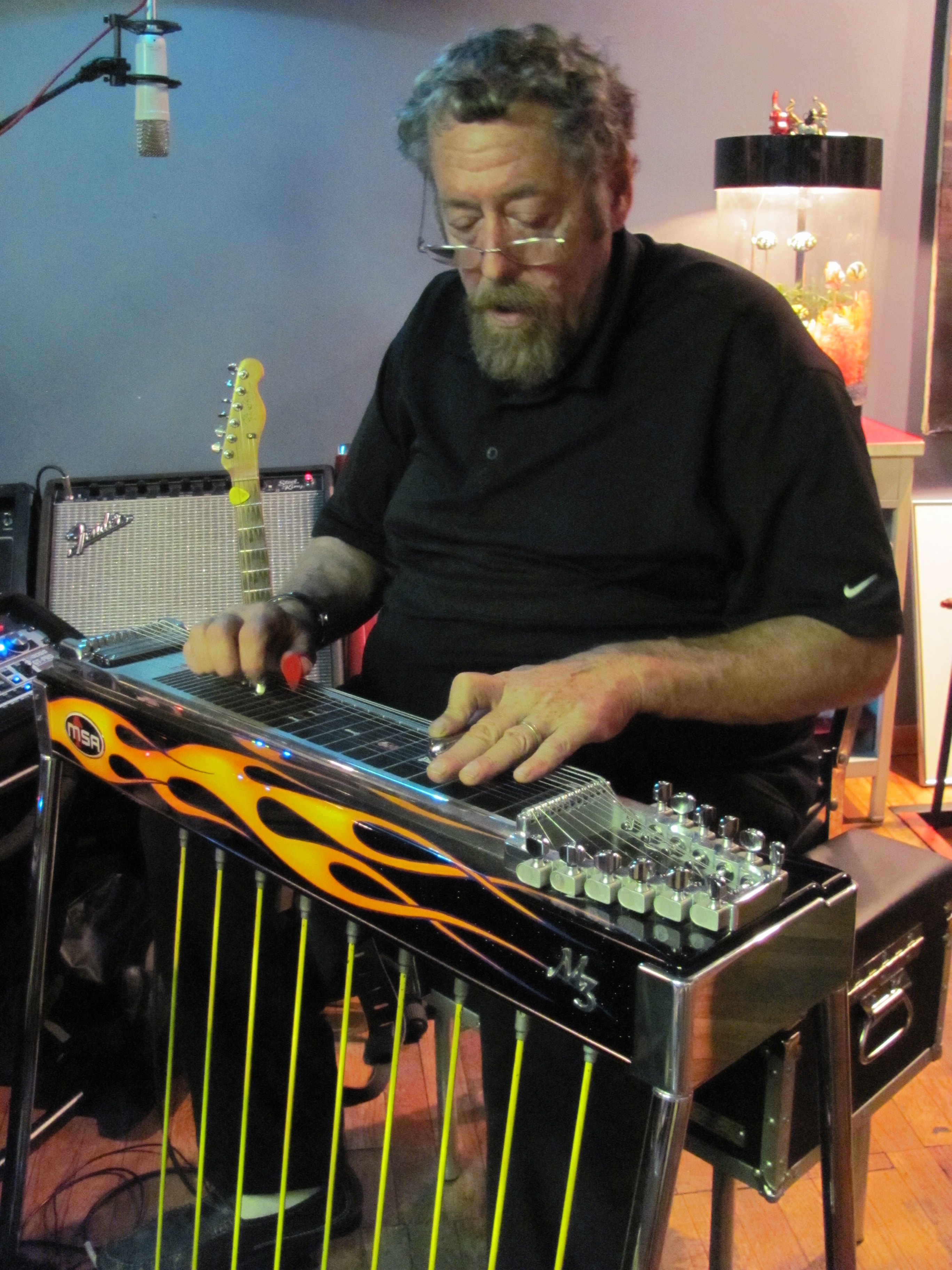
Bob is an attorney at law. He has practiced criminal defense and family law in Kansas City, MO for more than 40 years. He is also a fantastic guitar player who has appeared many times at Starlight Theater, the Uptown, and similar venues with B.B King, Ray Charles, the Romantics, and the like. Presently, he plays pedal steel guitar with Max Groove, New Age Jazz and R&B keyboardist.

He also regards himself an artist. He has shown painting, photography, and sculpture from time to time in Kansas City, Santa Fe, Sedona, and Denver. He receives royalties for his photographs displayed in art textbooks written by professor Stone. Students at the Kansas City Art Institute are sometimes introduced to Bob’s interior design style on their spring field trip to our house. At present, Bob finds it more fun to make dollhouses for me and our grandson.

Bob playing pedal steel guitar

Bob playing pedal steel guitar

Art, blog, History, Kansas City, Story, Uncategorized

My House The Trading Post 2.2

Image